Custom / notice the setting
Notice the local conventions
You do not need to perform every custom perfectly to be a considerate visitor. Read the setting, follow posted instructions and leave room for others. Tokyo's religious sites, commuter trains, cultural institutions and residential streets have different purposes; good manners begin with recognising which kind of place you have entered.
Distinguish a shrine from a temple
Meiji Jingū is a Shinto shrine in a wooded setting near Harajuku. Sensō-ji in Asakusa is a Buddhist temple. Both welcome visitors, but their religious identities and worship conventions are not interchangeable. A gate, an offering area or a busy approach is part of an active place of worship, not simply a backdrop.
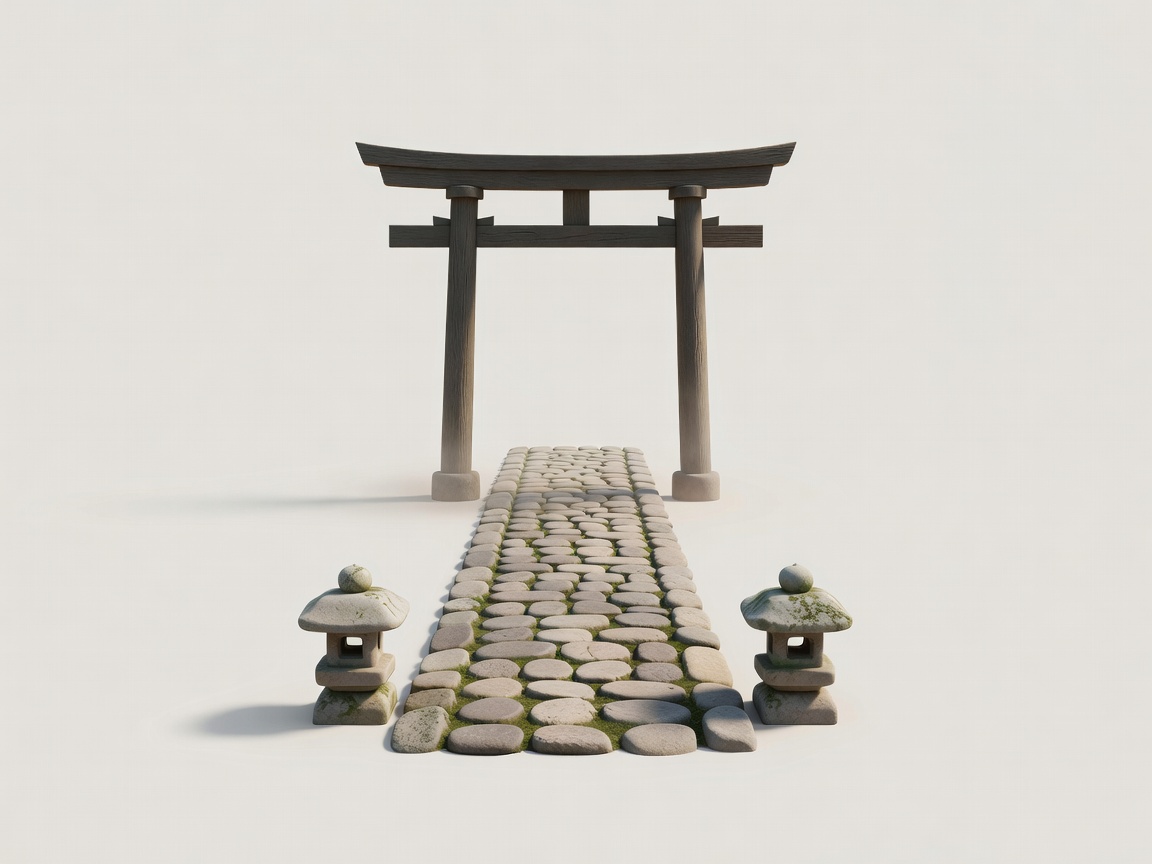
At a shrine, a slight bow at a torii gate is a common gesture, and visitors often avoid occupying the centre of the approach unnecessarily. Where a purification basin is available for use, follow the site's instructions rather than copying a remembered sequence without checking. Arrangements can vary, and a basin should not be treated as drinking water.
Clapping belongs to common Shinto prayer conventions, not to the ordinary Buddhist prayer practice at Sensō-ji. If you are not participating in worship, stand aside and observe quietly. There is no need to imitate a ritual for a photograph, and no need to enter an area that signs reserve for worshippers or staff.
Make photography a permission question
A crowded public approach does not imply that every adjoining interior permits photographs. At Sensō-ji and Meiji Jingū, read signs before photographing worship spaces. Avoid positioning a camera where it blocks people approaching an offering area, and do not turn another person's prayer into a close-up subject without permission.
Tokyo National Museum has collection and exhibition settings where photography rules depend on the object or display. A camera symbol beside one work does not settle the rule for the whole building. Follow object-level notices, restrictions on flash and instructions about equipment.
In Yanaka's narrow streets or Shimokitazawa's small shops, the same principle applies at a different scale. Ask before photographing shop interiors or staff. Doorways, private gardens and residential entrances are not extensions of a sightseeing route, even when their appearance catches your attention.
Share transport space without adding friction
On ordinary commuter trains, keep conversations subdued and avoid phone calls. Give passengers room to leave before boarding, and follow platform queue markings. Move a large bag out of the doorway where practical rather than expecting every passenger to navigate around it.
Priority seating is intended for people who may need it, including needs that are not visible. Pay attention to requests and signs without assuming that you can judge someone else's circumstances. Accessibility equipment and marked wheelchair spaces should remain usable.
At stations such as Shinjuku and Shibuya, stop to check directions away from the main stream of passengers. Escalator instructions should take precedence over habits you have heard about standing on one side. Walking routes, luggage and crowded conditions can make local signage especially important.
Follow the threshold in indoor spaces
Shoes are removed in some traditional interiors, homes and accommodation areas, but not at every entrance in Tokyo. Look for a raised threshold, shoe storage, slippers or a direct instruction. If the cue is unclear, ask before stepping farther inside rather than removing shoes automatically in a public lobby.
Where slippers are provided, follow the setting's distinction between floor areas. Toilet slippers, when supplied, belong in that space rather than being worn through the rest of the building. Tatami areas commonly require removing slippers as well as outdoor shoes.
Wet umbrellas create another threshold issue. Use a rack, bag or other arrangement offered at the entrance, and avoid leaving drips on seating or shop displays. Carrying an umbrella carefully on a crowded pavement is as useful as knowing a formal etiquette rule.
Use a small courtesy checklist
- Look for signs before entering, photographing or sitting.
- Keep entrances, queue paths and narrow lanes clear.
- Carry small rubbish until you find a suitable bin; follow sorting labels.
- Observe posted smoking rules rather than assuming any outdoor space permits smoking.
- Ask briefly when uncertain, and accept a restriction without turning it into a debate.
Tokyo is not culturally uniform. A busy shopping street in Akihabara and a residential lane in Yanaka have different expectations because people use them differently. Reading those differences is more reliable than memorising a sweeping rule about how everyone in the city behaves.